Reading & Discussion with Mirnes Sokolović and Tomislav Marković
Moderator: Silvia Stecher
Introduction: Julia Knaß, Paul Klingenberg
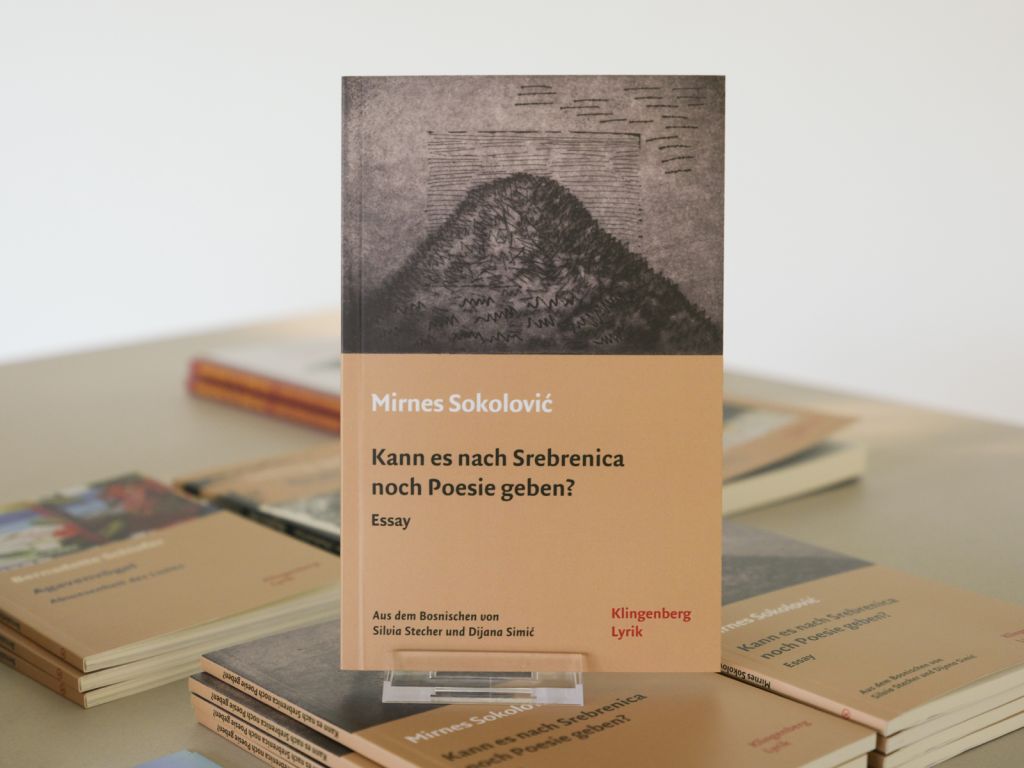
How can one write poetry when language is shattered and corrupted, when horror is unspeakable, when intellectualism has not only failed to prevent barbarism but has actually promoted it, and when reality has caught up with the avant-garde’s attacks on poetry? Thirty years after the genocide against the Bosniaks, literary critic Mirnes Sokolović, in his essay “Can There Still Be Poetry After Srebrenica?”—published in German translation by Klingenberg— once again raises the question of the ethical-aesthetic connections of literary writing—following Adorno’s dictum “to write a poem after Auschwitz is barbaric” and Danilo Kiš’s Poet(h)ik. The essay is supplemented by textual examples from Yugoslav and post-Yugoslav literary history, including poems by Tomislav Marković.
In short readings and a conversation with Silvia Stecher, who co-edited and translated the volume with Dijana Simić, Mirnes Sokolović and Tomislav Marković offer insights into trends and counter-trends in Bosnian/Croatian/Montenegrin/Serbian poetry and their poetological positions within the pan-European (post)genocidal context —a context that is particularly concentrated in Graz.
Event is held in German language, parts of the discussion will be in English!
born in 1986, author and literary critic. Studied literature in Sarajevo and Graz. Worked as a culture editor for the online portal e-novine (Belgrade) and the newspaper Oslobođenje (Sarajevo); co-founder of the literary magazine (sic!). Author of one novel, Rastrojstvo (Disruption, 2013), and two collections of essays: Izokrenuti durbin (Upside-Down Telescope, 2020) and Kraj avanture (End of the Adventure Story, 2021). 2023 Fellow at the Vienna Wiesenthal Institute for Holocaust Studies, 2024 IHAG Writer in Residence of the City of Graz.
born in 1976, lives and works in Belgrade, writing poetry, prose, satire, and journalistic pieces. Deputy director of the e-novine portal until its closure in 2016, co-founder of the “cultural propaganda collective” Beton (2006–2013). His published works include Vreme smrti i razonode (Time of Death and Amusement, 2009), the poetry collections Čovek zeva posle rata (Man Yawns After the War, 2014), Napred u zlo (Forward into Evil, 2017), and the collection of satires Velika Srbija za male ljude* (A Great Serbia for Little People, 2018). His texts have been translated into German, English, Hungarian, Polish, Italian, French, Slovenian, and Albanian.
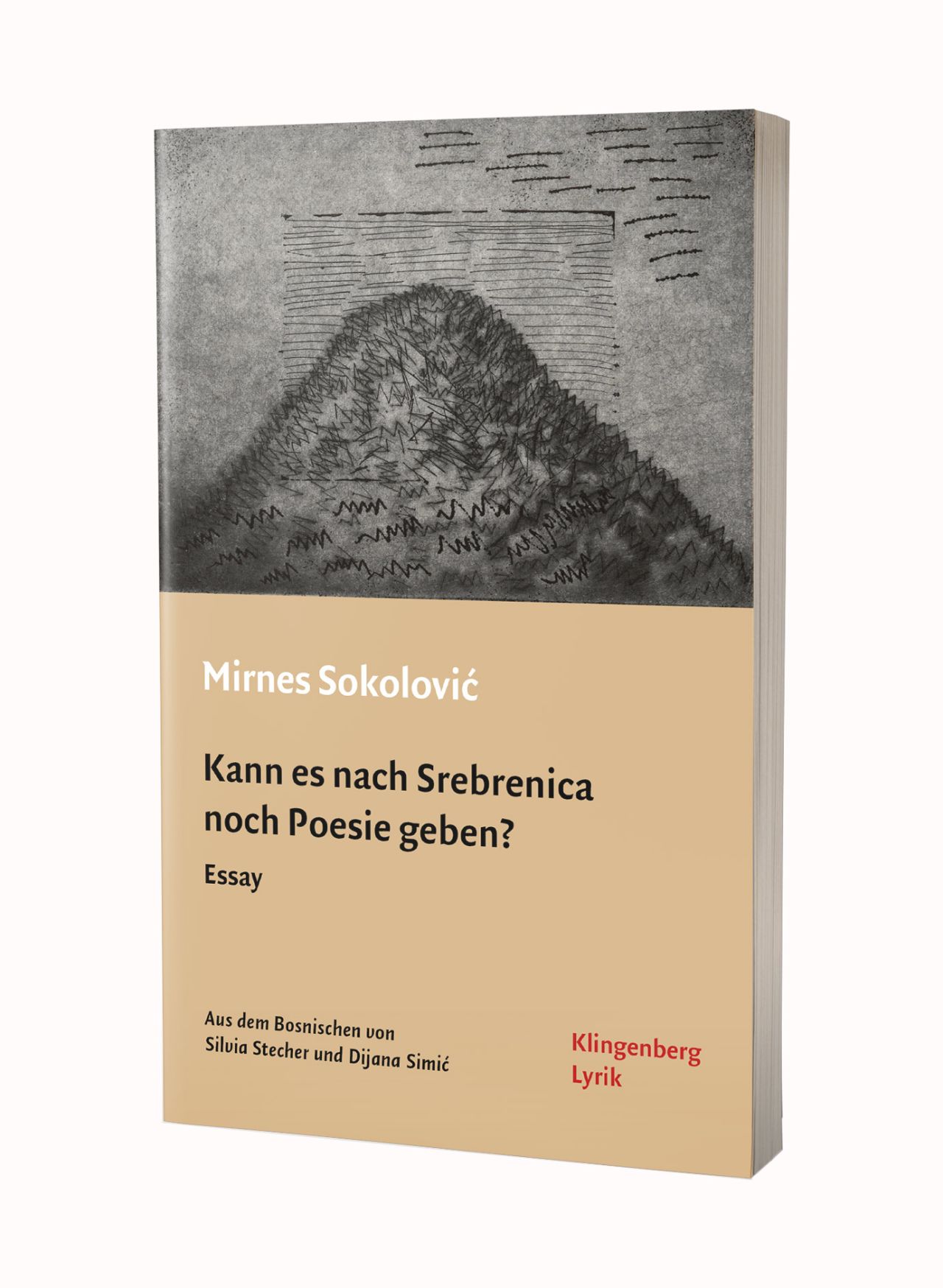
Mirnes Sokolović: Can There Still Be Poetry After Srebrenica? Edited and translated from Bosnian by Silvia Stecher and Dijana Simić (Klingenberg, Graz 2025)
This book was produced with support from the Future Fund of the Republic of Austria and Kulturvermittlung Steiermark
Text (German)
klingenbergverlag.at/shop/mirnes-sokolovic-kann-es-nach-srebrenica-noch-poesie-geben
Text (Bosnian)
sic.ba/wp-content/uploads/2020/06/Izokrenuti-durbin.pdf